
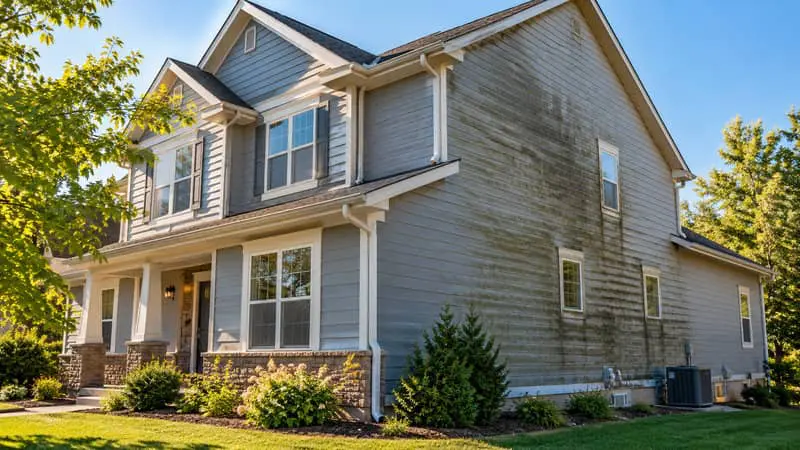
Walk around your home a few years after a repaint, and you may notice something puzzling: the front looks crisp, but the back is fading. One side has dark streaks below the roofline, and another shows peeling at the base. The same crew painted the whole house, the same products went on every surface, and all the painting happened at the same time. But somehow, the results look like four different jobs.
This isn’t unusual, and in most cases, it’s not a product failure. Your home’s exterior faces four different directions, each with its own combination of sun exposure, moisture, wind, and temperature variation. Paint responds to all of those conditions differently. That means the gap between the best-looking wall and the worst-looking one grows wider over time because of it.
Each Side of Your Home Has Its Own Microclimate
Uneven paint wear happens because every exterior surface faces its own set of conditions. The direction each wall faces determines how many hours of direct sun the wall receives each day, how quickly it dries after rain, and how often it cycles between wet and dry. Tree cover, neighboring structures, roof overhang depth, and ground-level moisture all add more variation on top of that.
A north-facing wall under a deep overhang and a south-facing wall with no shade overhead have almost nothing in common when it comes to how long their paint will last. One gets minimal UV exposure and stays damp for hours after rain. The other bakes under direct sunlight for most of the day. Expecting identical paint life on both is like expecting the same tire wear on a car that drives around dozens of turns every day and one that usually runs straight.
South- and West-Facing Walls Fade First
The sun travels from east to west and sits higher toward the south throughout the day. South-facing walls receive prolonged, direct sunlight from morning to mid-afternoon. West-facing walls absorb the most intense heat during the afternoon hours, when the sun is at its hottest.
UV radiation breaks down the binders in paint, which are the compounds that hold pigment in place and keep the film intact. You’ll see it first as chalking, where the surface picks up a powdery residue when you run your hand across it. Color fading and bleaching follow. In more advanced stages, the film itself can crack or pull away from the wood underneath as the layers continue to break down.
Darker colors absorb more heat than lighter ones, which speeds up the degradation of already sun-exposed walls. A south-facing wall in a deep charcoal or navy will often show visible wear several years before a lighter color with the same exposure. Flat or matte finishes also show UV damage more quickly than satin or semi-gloss finishes.
To be clear, you don’t need to completely avoid dark colors on south or west walls. However, you’ll need to account for that exposure when you choose the product and maintenance schedule for those walls.
Shaded and North-Facing Walls Fight Moisture, Not Sun
North-facing walls receive little to no direct sunlight during most of the year. Without sun to dry the surface after rain, dew, or overnight condensation, moisture lingers against the wall far longer than on the sunnier sides of the house. This creates conditions where mildew, algae, and mold grow.
Dark green or black streaking on north-facing walls or under tree cover is rarely a sign that the paint is failing structurally. It is usually biological growth taking hold on a surface that stays damp and shaded. If it’s left uncleaned, that growth can work its way into the paint film and eventually weaken its bond to the wood underneath.
Walls tucked behind dense landscaping face similar issues. A canopy traps humidity against the siding and blocks the drying effect of wind and sun. Peeling that originates from behind the surface, not from cracking on top, is a sign that moisture has worked through the paint film and broken the adhesion beneath it. This type of failure develops slowly, and it’s harder to reverse once it progresses.
Wind, Temperature Cycles, and Other Unexpected Factors
Winds carry rain at an angle, push dust against the paint surface, and create more mechanical stress on exposed walls than on sheltered ones. The side of a home that usually gets more wind also picks up more water intrusion around trim, windows, and penetrations. You can catch these problems before water gets behind the paint coating by routinely inspecting caulk joints on windward walls.
Temperature cycles stress the paint film in a different way. Paint expands in heat and contracts in cold. Walls with concentrated sun exposure experience more extreme swings than shaded walls. These temperature swings put even more stress on the film and any nearby sealant or caulk.
In colder climates, freeze-thaw cycles add further pressure, especially on wood siding and masonry. Moisture that enters a small gap can expand when it freezes, widening that gap further with each winter.
Roof overhang depth adds one more variable. A deep overhang shields the upper portion of a wall from direct rain and sun. Lower sections near grade level get more splash-back, more moisture wicking up from the ground, and less overhead protection. This is why peeling frequently starts lower on a wall and works upward instead of appearing all at once across the whole surface.
Why the Same Paint Can Wear Differently Wall to Wall
A quality paint product applied over a properly prepared surface will still age at different rates on different sides of your home. This isn’t a failure of the paint or its application. It’s just a reflection of the conditions each wall faces.
However, it’s still important to choose a coating that can handle the conditions around your home. Quality exterior paint should withstand common challenges:
- UV exposure
- Moisture
- Temperature fluctuations
- Mildew
- Wind
A wall facing unusually harsh conditions, such as heavy sun or persistent moisture, may need a product with added resistance to that specific problem. For most homes, though, the bigger priority is choosing a durable exterior coating that suits the surface and local climate rather than finding the perfect product for each individual factor.
Surface preparation is important for the same reason. A south wall that has chalked and lost adhesion needs cleaning and possibly a primer coat before new paint will bond and hold. Skip that step, and the new coat starts at a disadvantage before the first winter.
Experienced wood-siding painters can fix these problems for you. Catching chalking and adhesion loss early is much easier than waiting for an entire section of siding to fail.
Getting More Consistent Results Across Your Exterior
Uneven wear is never fully preventable, but you can reduce how noticeable the differences between walls get. Scheduling regular maintenance and choosing products based on each wall’s conditions are a great start. You’ll also need to choose qualified exterior home painting contractors who won’t cut corners on prep work. Doing all these things will extend the life of your home’s exterior paint.
A once-a-year walkthrough of the full perimeter, noting where early fading or biological growth is beginning, gives you the information you need to act before a problem advances. Soft washing shaded or north-facing walls once or twice a year removes mildew and algae before they establish a foothold. On high-UV walls, catching chalking or early color loss and addressing it early can buy several more years before a full repaint is needed.
When the time comes for a full repaint, experienced residential house painters can take a look at your home’s orientation, siding material, and prior wear patterns. From there, they can recommend the right products for each wall. That level of planning is one of the reasons some homes hold their exterior paint for a decade or more, while others start showing wear in half that time.