
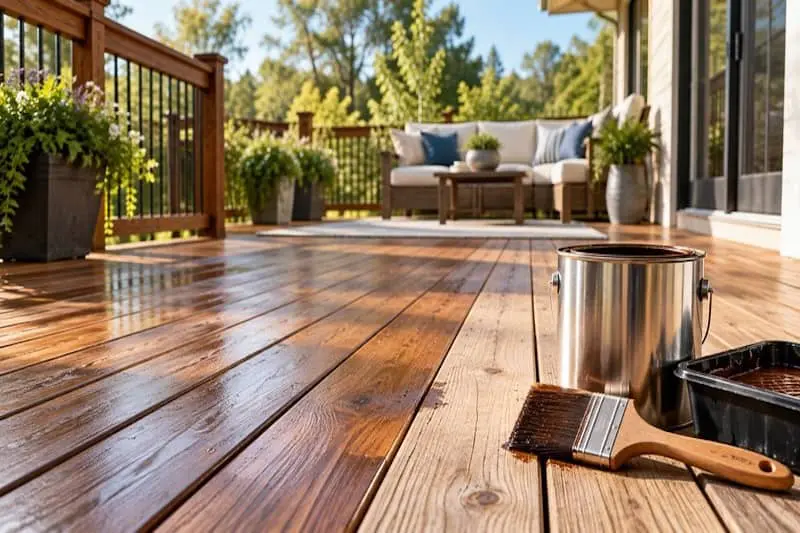
There are few better moments than when the sun finally comes out after a long winter. But with all that warmth and light comes a negative side.
The sun does more damage to outdoor wood than most homeowners think about until the signs are obvious. Grayed boards, surface checking, a rough texture that soaks up more stain every season, and wood that feels brittle underfoot are all signs that UV exposure has left its mark.
When this happens, it’s time to reach out to UV-resistant deck staining contractors . Deck stain has two jobs: protect the wood and give you the look you want. The tricky part is deciding which kind of stain, because sometimes, improving protection can mean giving up some of the cosmetic side (and vice versa).
Working through that decision means you need to understand the four main deck stain categories, what each one does, and the trade-offs each one carries.
What UV Exposure Does to Deck Wood
Most people associate UV damage on surfaces with faded colors, but it does much more than that. When a deck is exposed to direct sunlight for a long period of time, the UV radiation breaks down the lignin in the wood’s surface structure. This causes graying, surface checking (small cracks along the grain), and a gradual drying out. UV light drives out the natural oils that keep wood flexible, leaving it brittle and open to moisture damage.
A high-quality deck stain addresses both problems. It blocks UV radiation from reaching the wood surface and provides a protective barrier against moisture. Together, that slows down the breakdown process significantly.
The question isn’t whether your deck needs a UV-protective stain, because it absolutely does. The better question to ask is which type provides the right balance of protection and appearance. Not every option works equally well in every setting.
The 4 Stain Types and What They Each Do
Deck stains fall into four general categories based on opacity: transparent, semi-transparent, semi-solid, and solid. Each represents a different position on the trade-off between showcasing the natural wood and providing surface coverage that blocks UV and resists moisture.
If you want to have a productive conversation with your exterior home painters before committing to a finish, you’ll want to understand the differences between each type.
Transparent
Transparent stains penetrate the wood, adding a subtle tint while keeping the full grain and natural texture visible. They provide the most natural look, but they also offer the least UV protection of the four types.
Because they sit in the wood rather than on it, transparent stains tend to wear from the surface instead of peeling. That makes reapplication easier. On a deck with regular sun exposure, transparent stains typically need reapplication every one to two years.
Semi-Transparent
Semi-transparent stains carry more pigment and provide slightly more UV protection while still allowing a good amount of grain to show through. The color is more noticeable, but you can still easily see the wood texture through the finish. If you choose a semi-transparent stain, you’ll generally need to schedule a reapplication every two to three years, depending on exposure conditions.
Semi-Solid
Semi-solid stains carry enough pigment to significantly change the color of the wood while still allowing some grain texture to show through. They provide considerably more UV protection than transparent or semi-transparent options. Semi-solid stains usually last three to four years before needing reapplication.
Solid
Solid stains function more like paint than traditional stains. They form a film on the wood surface, block UV effectively, and cover virtually all of the natural grain. Solid stains offer the strongest color retention and UV protection. However, once you apply a solid stain, you’re committed to a painted appearance and will need to maintain your deck as you would a painted surface going forward.
When Transparent or Semi-Transparent Is the Right Choice
Transparent and semi-transparent stains make the most sense when the wood itself is worth showing off. New decks made from high-quality cedar, redwood, or similar wood often have clean grain and natural color variations that add to their appeal. A stain that allows those features to show through can protect the wood without hiding what makes it attractive.
Let’s say you’ve chosen quality lumber for its grain, texture, and color. Covering those details with a semi-solid or solid stain defeats part of the purpose. A more transparent stain lets you protect the deck while still enjoying the look of the wood itself.
These stains are also ideal for homeowners who are willing to put in more work to maintain their deck in exchange for keeping that natural appearance. A deck in a shaded yard or under a covered structure doesn’t receive direct sun throughout the day. It will hold a transparent finish longer than one in full southern or western exposure, which will need regular maintenance.
Even in the situations they’re best suited for, transparent and semi-transparent stains provide less UV blocking than semi-solid and solid stains. On a deck that takes direct sun from mid-morning through late afternoon, the finish will degrade faster and the wood will show more graying between applications. You’ll also have to schedule reapplications more often.
If you want to preserve the natural look of your wood, go in with clear expectations about that maintenance commitment.
When Semi-Solid or Solid Stain Makes More Sense
When durability and protection are more important than keeping the wood’s appearance, a semi-solid or solid stain is the natural choice.
Good candidates for these stains include:
- Older decks
- Wood with significant weathering or surface checking
- Decks built from lower-grade pressure-treated lumber
A semi-solid or solid product evens out color variation and surface inconsistencies. It also gives the deck a cleaner, more uniform appearance while providing much better UV protection than transparent stains.
Decks in high-sun environments are especially suited for the stronger UV-blocking pigment load in a semi-solid or solid stain. The added thickness also provides better moisture resistance, which is especially important in climates with wet winters or many freeze-thaw cycles that aggressively stress outdoor wood. A finish that repels moisture affects the life of the wood beneath, not just the surface appearance.
The trade-off is appearance and commitment. A solid stain on a deck is a long-term decision. If you ever decide to transition back to a transparent or semi-transparent finish, you’ll have to strip the surface back down to bare wood. That’s a big project. Homeowners who want the flexibility to change the look of their outdoor space down the road should factor that into their decision.
Proper Prep Determines How Long the Results Last
Choosing the right stain is only half of the equation. Two other factors determine how long the results hold: the way the surface is prepared and the way the product is applied.
Wood that hasn’t been cleaned and lightly sanded before application won’t absorb stain evenly, which results in blotchy coverage and early deterioration at weak points. An old stain that hasn’t been properly addressed before reapplication can prevent adhesion. That will leave the new coat looking good initially but separating within a few months.
In both cases, the problem isn’t the product. It’s the surface where the product was applied.
This is where experienced painting contractors can bring valuable expertise to the table. Experienced contractors can assess the wood’s condition, determine how much preparation it needs, and help you choose the best product for your deck’s appearance and durability.
In the end, the goal is to create a finish that the wood can hold onto through repeated seasons of sun, moisture, and temperature changes.
What Should Drive Your Stain Choice
The right deck stain comes down to more than the color you want to see when the project is finished. The condition and species of the wood, the amount of sun and weather it receives, and how often you’re willing to maintain the surface all point toward different choices.
Transparent and semi-transparent stains make sense when your goal is to preserve the natural character of good wood, and when you’re committed to more frequent maintenance. Semi-solid and solid stains are better for stronger UV protection and more coverage when the deck is heavily exposed, weathered, or simply needs a more consistent appearance.
The important thing is to choose based on how the deck lives outdoors, not just how the stain looks on the day it goes on. Your goal should be to choose a finish that suits the wood, exposure, and maintenance expectations. When you do that, you’ll have a deck that meets all your goals long after you stain it.